
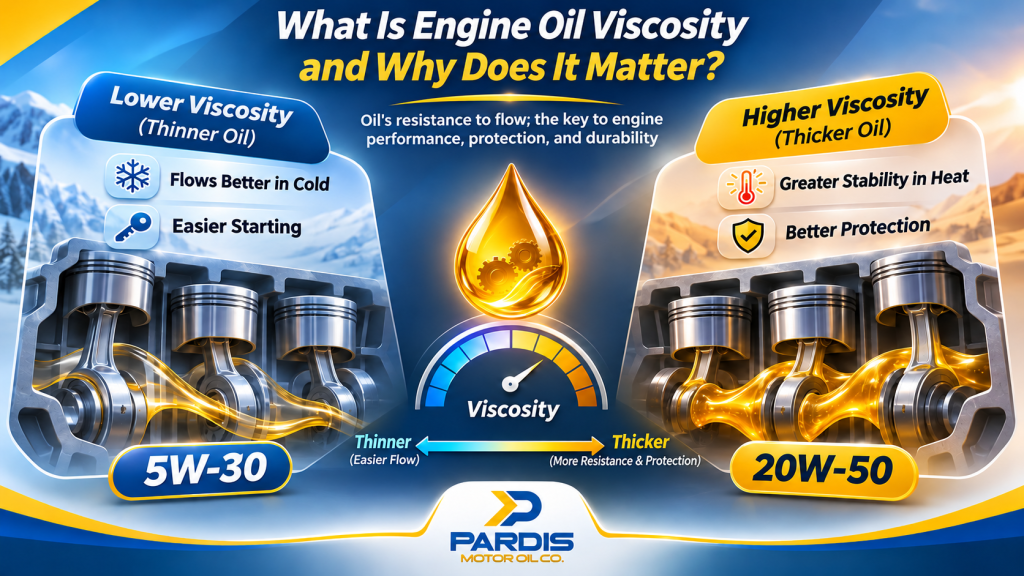
1. What Is Engine Oil Viscosity and Why Is It Important?
Choosing the right engine oil is one of the key factors in maintaining proper engine performance and extending the lifespan of its components. One of the main characteristics of engine oil is viscosity, which refers to the oil’s resistance to flow.
The SAE classification system categorizes multigrade engine oils using grades such as 5W-30, 10W-40, and 20W-50. The number before the letter W, which stands for Winter, indicates the oil’s low-temperature performance. A lower number generally indicates better cold-start performance. The second number represents the oil’s viscosity grade at engine operating temperatures.
Differences Between 5W-30, 10W-40, and 20W-50 Engine Oils
5W-30 Engine Oil: This oil performs well at low temperatures and helps oil circulate effectively when starting a cold engine. Its lower viscosity at operating temperatures can also help reduce energy losses and improve fuel efficiency in engines designed for this grade.
10W-40 Engine Oil: This grade has a higher viscosity at engine operating temperatures compared to 5W-30. It is suitable for vehicles whose engine manufacturers approve or recommend this viscosity grade.
20W-50 Engine Oil: This oil has a higher viscosity at operating temperatures than the other two grades. It is used in some older engines or engines with specific lubrication requirements. However, it may not be suitable for modern engines designed to operate with lower-viscosity oils.
Which Engine Oil Is Most Suitable for Your Vehicle?
Choosing engine oil should not be based solely on climate, vehicle age, or engine mileage. The most important factors are the viscosity grade and performance specifications recommended by the vehicle manufacturer.
Standards such as API classifications and specific automaker approvals should also be considered when selecting engine oil.
Remember that thicker engine oil does not necessarily mean higher quality. Using an unsuitable viscosity grade can negatively affect lubrication, fuel consumption, and overall engine performance.
Conclusion
Understanding the differences between 5W-30, 10W-40, and 20W-50 engine oils helps drivers make more informed decisions. Each grade is designed for specific technical requirements, and the best engine oil is the one that meets the engine’s needs, manufacturer-approved specifications, and operating conditions.
Pardis Motor Oil Company emphasizes the importance of technical awareness when selecting lubricants and considers reviewing product specifications and following vehicle manufacturers’ recommendations essential practices for proper engine maintenance.