
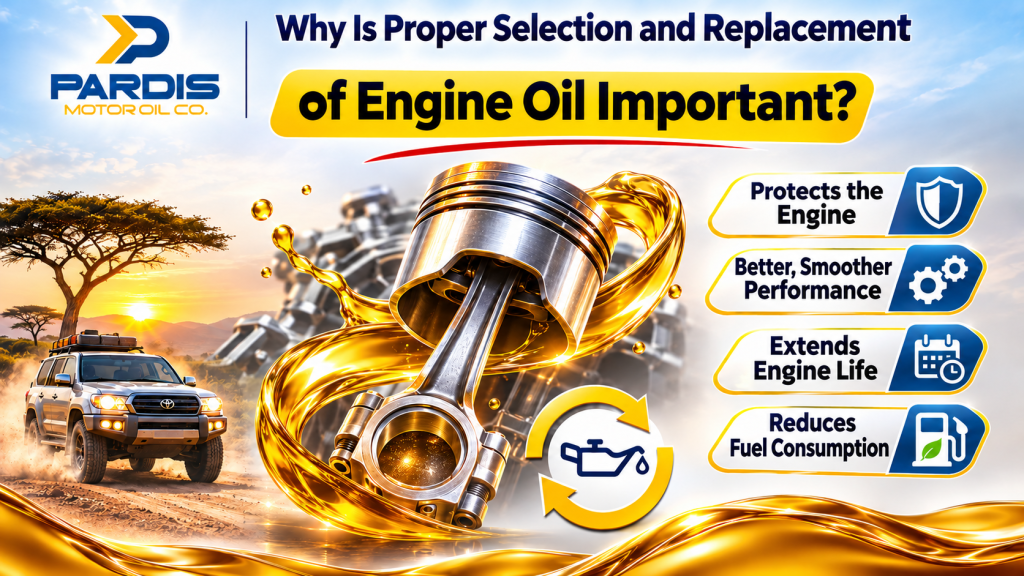
Why Is Choosing and Changing Engine Oil Correctly Important?
Avoiding common engine oil change mistakes is essential for maintaining engine performance and extending the lifespan of your vehicle. Engine oil protects internal components by reducing friction, helping dissipate heat, and controlling contaminants.
However, simple mistakes when purchasing or changing engine oil can reduce lubrication efficiency, increase component wear, and even lead to mechanical problems. Understanding these mistakes is an important step toward proper engine maintenance.
1. Choosing Engine Oil Based Only on Price or Brand
One of the most common mistakes is selecting engine oil solely based on its low price, brand reputation, or the assumption that more expensive oil always provides better quality.
In reality, a higher price or a well-known brand does not automatically guarantee superior quality or compatibility with your engine.
The right engine oil must meet the vehicle manufacturer’s recommended SAE viscosity grade, API or ACEA performance specifications, and any required manufacturer approvals.
Therefore, choosing engine oil based on technical specifications is more important than relying solely on price or advertising.
2. Assuming Thicker Engine Oil Always Provides Better Protection
Some drivers believe that thicker engine oils, such as 20W-50, provide better engine protection under all operating conditions.
However, different engines are designed to operate with specific viscosity grades. Using an unsuitable oil may negatively affect oil circulation during cold starts, fuel efficiency, and overall lubrication system performance.
Engine oil must provide an adequate protective film between moving components while circulating efficiently throughout the lubrication system.
For this reason, the correct viscosity grade should always be selected according to the vehicle manufacturer’s recommendations.
3. Changing Engine Oil Based Only on Its Color
One of the most common engine oil change mistakes is assuming that dark engine oil indicates poor quality or that the oil has reached the end of its service life.
In reality, oil darkening does not necessarily indicate deterioration. In many cases, it can be associated with the normal operation of detergent and dispersant additives.
High-quality engine oils contain additives that help control deposits and keep contaminants produced during engine operation suspended in the oil.
As a result, engine oil may gradually change from a clear or light appearance to a darker color after a certain driving distance, for example, approximately 1,500 to 2,500 kilometers.
This color change may reflect normal contaminant suspension and cleaning activity. However, the timing varies depending on engine condition, operating environment, and oil formulation. Darkening alone does not prove oil quality or cleaning effectiveness.
Conversely, engine oil that still appears relatively clear may have already lost some of its performance characteristics.
Therefore, oil change intervals should be determined according to the vehicle manufacturer’s recommendations, driving conditions, and technical evaluations when necessary, rather than relying solely on oil color.
4. Neglecting the Oil Filter and Correct Oil Level
The oil filter plays an important role in capturing particles and contaminants circulating within the engine’s lubrication system.
Using a worn or overdue oil filter can reduce filtration efficiency and negatively affect engine protection.
Additionally, both insufficient and excessive oil levels may cause mechanical problems. Low oil levels can compromise lubrication, while overfilling may cause issues such as oil foaming under certain conditions.
During routine maintenance, the oil filter should be inspected or replaced according to the manufacturer’s recommended schedule, and the oil level should be checked carefully after servicing.
5. Buying Engine Oil Without Checking Authenticity and Storage Conditions
Purchasing counterfeit, unreliable, or improperly stored engine oil can put engine performance and protection at risk.
Before purchasing engine oil, consumers should examine the packaging seal, technical specifications, manufacturer information, and seller credibility.
Improper storage conditions, including prolonged exposure to extreme temperatures or contamination, may also affect lubricant quality.
Buying from authorized or reputable distributors and following the manufacturer’s product authentication procedures can help reduce the risk of purchasing counterfeit or unsuitable products.
Conclusion: Make Informed Choices for Better Engine Protection
Purchasing and changing engine oil is more than a routine maintenance task; it is an essential part of protecting your vehicle’s engine.
Choosing the correct viscosity grade and performance specifications, following recommended oil change intervals, maintaining the oil filter, and purchasing authentic products can help preserve engine performance and reduce maintenance costs.
It is also important to remember that darker oil, higher prices, or greater viscosity do not automatically indicate better oil quality.
The most effective approach is to choose engine oil that meets your engine’s technical requirements and follow proper vehicle maintenance practices.
Pardis Motor Oil Company emphasizes the importance of informed lubricant selection, technical specifications, and vehicle manufacturer recommendations, recognizing that effective engine protection begins with choosing the right oil.