
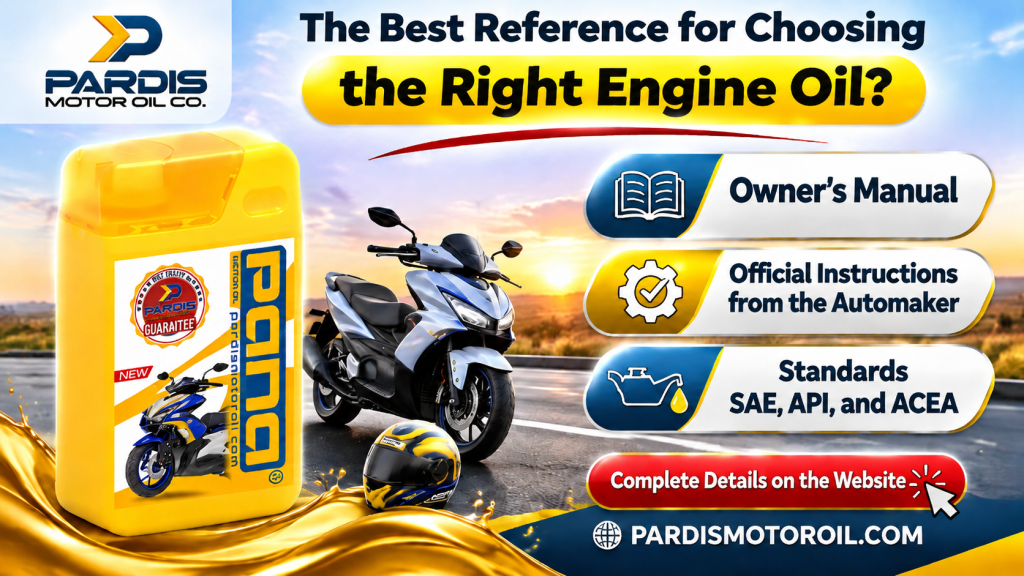
Why Is Choosing the Right Engine Oil Important?
Knowing how to choose the right engine oil is essential for protecting your vehicle’s engine and maintaining its performance.
Every engine has specific lubrication requirements based on its mechanical design, operating temperature, lubrication system, and engineering technology.
Using unsuitable engine oil can negatively affect lubrication efficiency, component wear, and overall engine performance.
But who should you trust when selecting engine oil: a mechanic, an oil retailer, or the vehicle manufacturer?
Vehicle Manufacturers: The Most Reliable Source for Engine Oil Recommendations
The most authoritative source for selecting suitable engine oil is the vehicle manufacturer.
Automakers understand the engineering characteristics of their engines and determine the required lubricant specifications through technical testing and performance evaluation.
These requirements are generally published in the vehicle’s owner’s manual or official service and maintenance documentation.
Therefore, the first step when selecting engine oil should always be to consult the manufacturer’s official recommendations.
What Information Does the Owner’s Manual Provide About Engine Oil?
The owner’s manual typically specifies the required SAE viscosity grade, lubricant performance classification, and, where applicable, manufacturer-specific oil approvals.
For example, 5W-30 and 10W-40 represent SAE viscosity grades, while API and ACEA classifications describe different aspects of lubricant performance.
Some vehicle manufacturers also establish their own technical specifications that an engine oil must meet.
Consequently, two engine oils with the same SAE viscosity grade are not necessarily equally suitable for the same vehicle.
Are Recommendations from Mechanics or Oil Retailers Enough?
Experienced mechanics and lubricant specialists can provide valuable advice when choosing engine oil.
However, their recommendations should always align with the specifications established by the vehicle manufacturer.
Selecting oil solely based on personal experience, brand reputation, price, or climate may overlook important technical requirements.
When there is uncertainty about the appropriate oil, consulting an authorized dealership or the manufacturer’s technical support department is a reliable way to obtain further guidance.
The Role of SAE, API, and ACEA Standards in Engine Oil Selection
The SAE classification defines the viscosity grade of engine oil, while API and ACEA establish performance classifications and requirements for lubricants.
However, the presence of a recognized standard on an oil container does not automatically mean that the product is suitable for every engine.
The selected lubricant must meet the viscosity grade, performance specifications, and any manufacturer-specific requirements established for the vehicle.
For engines requiring a particular manufacturer approval, confirming that the oil holds the applicable approval is especially important.
How Can You Find the Right Engine Oil for Your Vehicle?
First, identify the exact vehicle model, model year, and engine type.
Next, consult the owner’s manual or the automaker’s official technical documentation to determine the required oil specifications.
Then compare these requirements with the information printed on the oil packaging and provided in the product’s Technical Data Sheet (TDS).
It is also important to distinguish between an oil that is described as recommended for use and one that has received an official manufacturer approval. These statements do not necessarily mean the same thing.
Conclusion: Choose Engine Oil Based on Technical Requirements, Not Guesswork
Selecting suitable engine oil should be based on reliable technical information rather than assumptions or personal preferences.
The vehicle manufacturer and its official owner’s manual are the primary references for determining the correct viscosity grade, performance classification, and other lubricant requirements.
Mechanics, lubricant specialists, and oil selection tools can help identify suitable products, but their recommendations should remain consistent with the specifications established by the automaker.
Pardis Motor Oil Company emphasizes the importance of informed lubricant selection, understanding technical standards, and following vehicle manufacturers’ recommendations.
Effective engine protection begins with choosing an oil that meets the engine’s actual operating and technical requirements.