
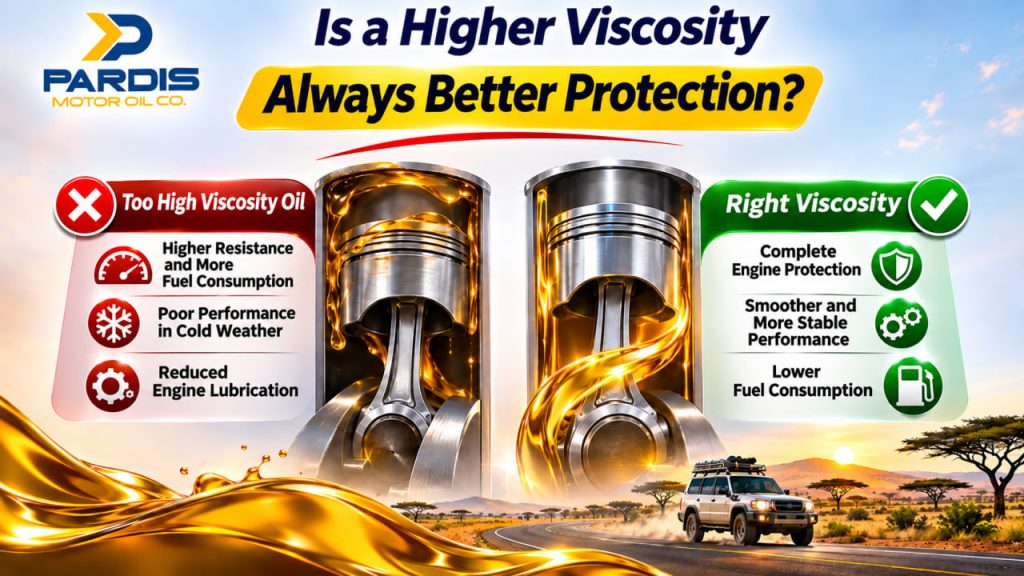
One of the most common beliefs among drivers is that thicker engine oil provides greater protection for internal engine components. But does thicker engine oil really deliver better performance?
From a scientific perspective, higher viscosity does not always mean better protection. Engine oil must maintain the right balance between forming a protective lubricating film, flowing efficiently through the engine, and reducing friction to ensure effective lubrication.
The Role of Viscosity in Forming a Protective Oil Film
Viscosity refers to a fluid’s resistance to flow. Engine oil forms a lubricating film between moving surfaces, helping reduce direct metal-to-metal contact and minimize wear.
Under certain operating conditions, higher viscosity can contribute to a thicker lubricating film. However, if the oil’s viscosity exceeds the engine’s requirements, resistance to flow may increase and overall lubrication efficiency may decrease.
Effective engine protection depends on maintaining sufficient oil film thickness without creating unnecessary resistance within the lubrication system.
How Does Thicker Engine Oil Affect Engine Performance?
When starting an engine, particularly in cold weather, oil must flow efficiently to various parts of the lubrication system.
Using excessively thick engine oil that does not match the engine’s design may increase pumping resistance and negatively affect lubrication during the initial stages of engine operation.
Higher viscosity can also increase energy losses caused by fluid friction, potentially leading to higher fuel consumption in certain engines.
Therefore, selecting thicker engine oil without considering the vehicle manufacturer’s specifications does not necessarily provide additional protection.
Is Thinner Engine Oil Always a Better Choice?
Just as excessively high viscosity can cause problems, using oil with a viscosity lower than the engine requires may also be unsuitable.
Under high temperatures and heavy operating loads, engine oil must maintain an adequate lubricating film between moving components.
If viscosity is too low for the operating conditions, oil film thickness may decrease, increasing the risk of direct surface contact and component wear.
For this reason, optimal engine performance depends on selecting an oil viscosity that matches the engine’s design and actual operating requirements.
Why Does Engine Design Matter When Choosing Oil Viscosity?
Different engines have different lubrication requirements based on factors such as component clearances, bearing design, oil pump characteristics, and operating temperatures.
An oil that provides effective protection in one engine may not be suitable for another.
This is why vehicle manufacturers determine recommended viscosity grades through engineering design, technical testing, and evaluation under different operating conditions.
Choosing the correct engine oil requires following the viscosity grades and performance specifications approved by the vehicle manufacturer.
Engine Protection Depends on More Than Oil Thickness
Viscosity is only one factor influencing the protective performance of engine oil.
Base oil quality, anti-wear additive technology, thermal stability, oxidation resistance, and deposit control also contribute to effective engine lubrication.
Consequently, the quality of two engine oils cannot be accurately compared based solely on their thickness.
Recognized performance standards, including API and ACEA specifications, as well as manufacturer approvals, should also be considered when selecting a suitable lubricant.
Conclusion: Better Protection Comes From the Right Viscosity
The best engine oil is not necessarily the thickest or the thinnest oil available. It is the oil whose properties match the engine’s technical requirements.
Selecting the appropriate viscosity can help reduce wear, maintain effective lubrication, and extend the service life of engine components.
Rather than assuming that higher viscosity automatically provides better protection, drivers should rely on technical specifications and the recommendations of their vehicle manufacturers.
Pardis Motor Oil Company emphasizes the importance of scientifically informed lubricant selection and the use of engine oils that comply with relevant technical standards and actual operating conditions.